

Solving The American Car...Again
We live in a world where Car Bad, Train Good. But why exactly *is* the modern car the worst it's ever been?

The other day, I had the pleasure of seeing a baseball game played by the independent Frontier League Washington Wild Things of Washington, Pennsylvania. It went well. On the drive down, though, one thing of note stuck with me - a billboard, somewhere along interstate 79 shortly after getting into Washington County. One of the local GM dealers is hocking the 2025 Silverado HD, a truck that starts at $51,600 on the low end (not counting built-to-order non-inventory models, which start at $47,495). Washington, for reference, has a median household income of $25,764.
The residents of Washington cannot afford to buy this truck. But they still sell plenty of ‘em and similar models via staggeringly high-payment, high-interest loans. The question of how people fall for it is a simple one - the billboard was advertising it with an attached tagline: “a truck you don’t have to be ashamed of”.
It was in that moment that, not only did I understand how I was gonna open this article that I’d been struggling with for months, but I understood all of the American automotive industry - from the corporate minds that engineered all of this over several decades to the all-time record number of American consumers who are at least 60 days behind on their car payments.
I understood the corporate side to all this even more when I opened the websites of every major American automaker and confirmed that, indeed, since the discontinuation of the Chevrolet Malibu last year, not a single American major auto manufacturer, excluding high-performance sports cars, makes anything smaller than a larger crossover/compact SUV - the Chevrolet Trax, which is actually based on a design for the more compact-focused Chinese market, is the smallest option.
And with the 2025 Trax - still the most compact vehicle from an American manufacturer on the market - being 14.9 feet long, 6 feet wide, and 5 feet tall, a near 1:1 match for the best-selling full-size SUV in 2000, the Ford Explorer (14.9 feet long, 6 feet wide, and 5.6 feet tall), it’s not exactly hard to see how exactly pedestrian fatalities have increased by nearly 80% in 15 years. In fact, keeping that that 2000 Ford Explorer number (15x6x6, rounding up) in mind, comparing it to the 2025 Explorer - still the most popular full-size SUV in the US - paints an even starker picture - 16.5 feet long, 7 feet wide, and 6 feet tall. Most interestingly, however, is the ground clearance (6.7 inches in 2000 vs. 8 inches in 2025). Combining that with the fact that the engine bay is bigger, the entire car is significantly heavier, and modern cars typically having a much flatter-shaped hood as opposed to one sloped upwards, it doesn’t require much imagination to see where all the extra passenger mulching comes from.
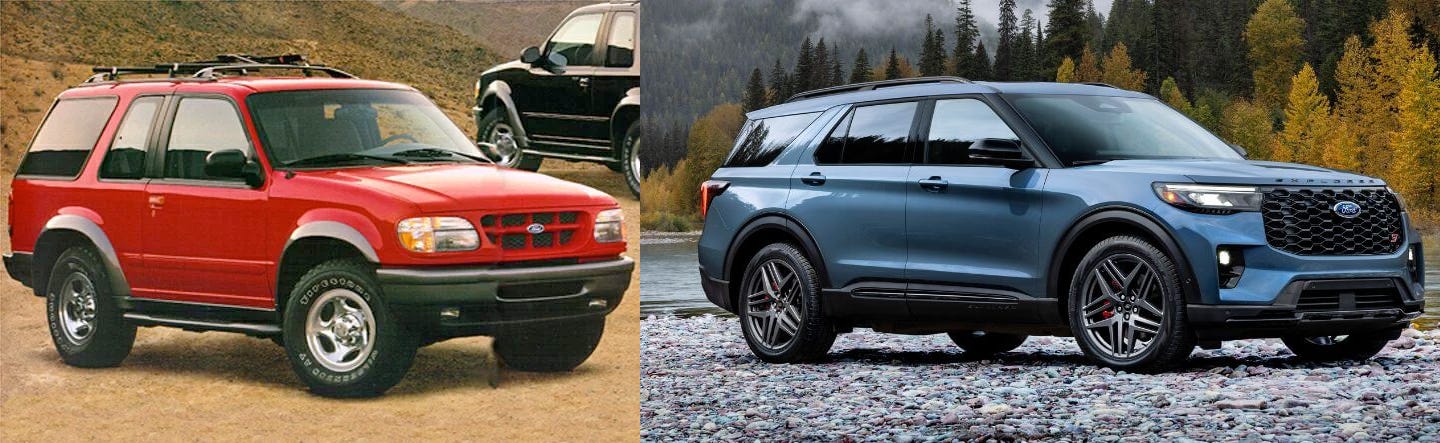
Also worth thinking about when picturing the state of the automotive industry is the fact that vehicles have experienced inflation at a much more disparate rate compared to baseline inflation - the median new car price in 2000 was $21,041, which, with inflation, would equal about $40,207. The median new car price in May 2025 was just under $51,000. And once you buy it, repair costs have also skyrocketed, inflating 44% since 2019, and insurance costs rose anywhere from 25% to 40% since 2022, depending on what state you live in.
So, let’s observe the bigger picture here. Cars on the market in the United States are larger overall, there’s much less in the way of overall model and general class variety, with American manufacturers vacating the market for entire classes, they’re drastically more expensive to buy especially considering current loan interest rates, and they’re drastically more expensive to maintain and insure after buying them.
Basically, it sounds like we’re in some real shit as a society, especially considering our near-universal societal car dependency, as public transit is continually gutted across governments on many levels run by both parties that are hostile to any suggestion that maybe, just maybe, so much of our world shouldn’t revolve around driving1.
So how did we get here?
In 1967, Honda began importing their first model in the United States - the N600 city car. It was light, it was technologically advanced, it was powerful (reviewers took it up over 70mph), it was cheap, and it had phenomenal gas mileage - rated for 30mpg, compared to a US average of around 13mpg.
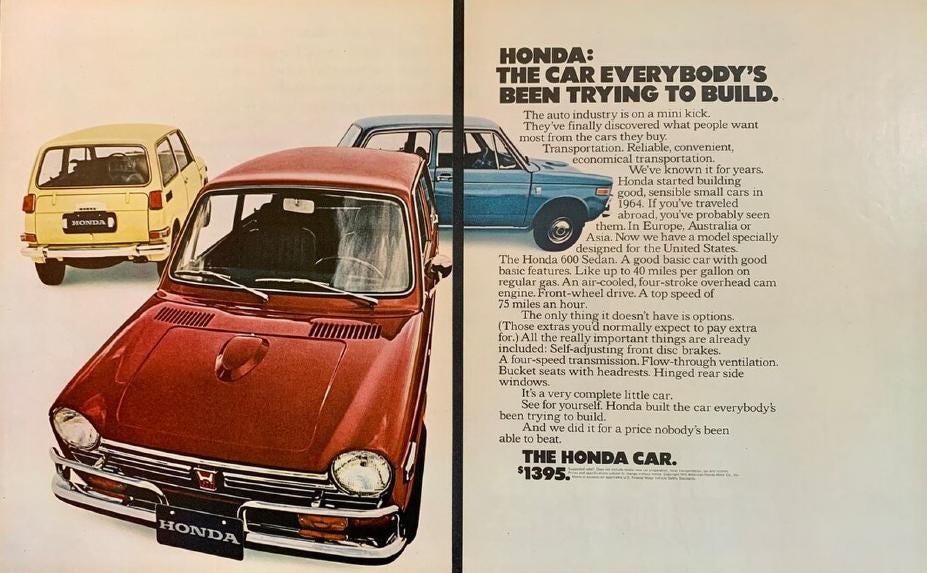
Toyota would begin selling the Corolla in 1968, to muted initial success in North America. 1970 would be a bit of a renaissance for the subcompacts in America - introduced that model year were AMC’s Gremlin and Pacer, Ford’s Pinto (slash Mercury’s Bobcat), and Chevrolet’s Vega. Mitsubishi would respond by entering the import market in 1971, rebadging the Mitsubishi Galant as the Dodge Colt, and in 1973, Honda would make one of the most important moves in American automotive history by introducing the one-and-only Civic to US consumers. Volkswagen’s Beetle was also selling steadily, although it had been on the market in the US in some form since 1949.
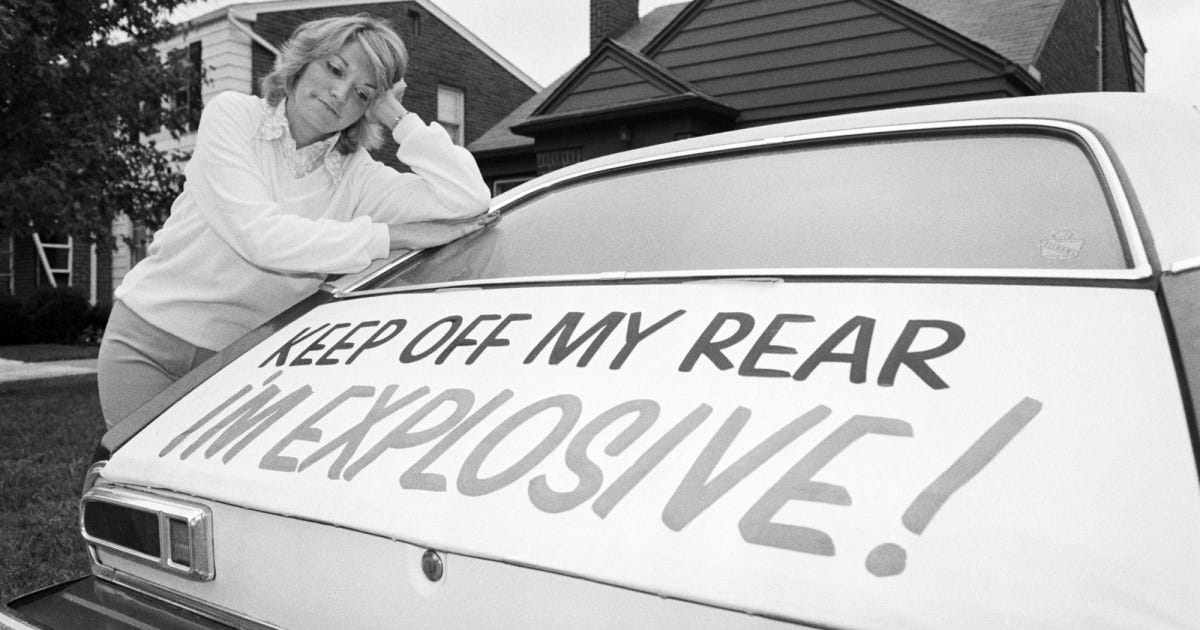
What would happen next would essentially be a perfect storm for the foreign subcompact manufacturers. All three of the American-made subcompact models listed above, which were larger and got worse mileage than their Japanese contemporaries to boot, would very quickly show themselves to be bad cars. The Vega would have a notoriously unreliable engine, issuing three major recalls in 3 months of 1973, affecting over 500,000 vehicles. Beyond that, an issue with the rustproofing process meant that most early Vegas had no rustproof coating on the front fender, leading to GM having to replace thousands of rusty fenders under warranty by 1973. The Ford Pinto, of course, came with a factory design quirk that meant they Just Kinda Did That.
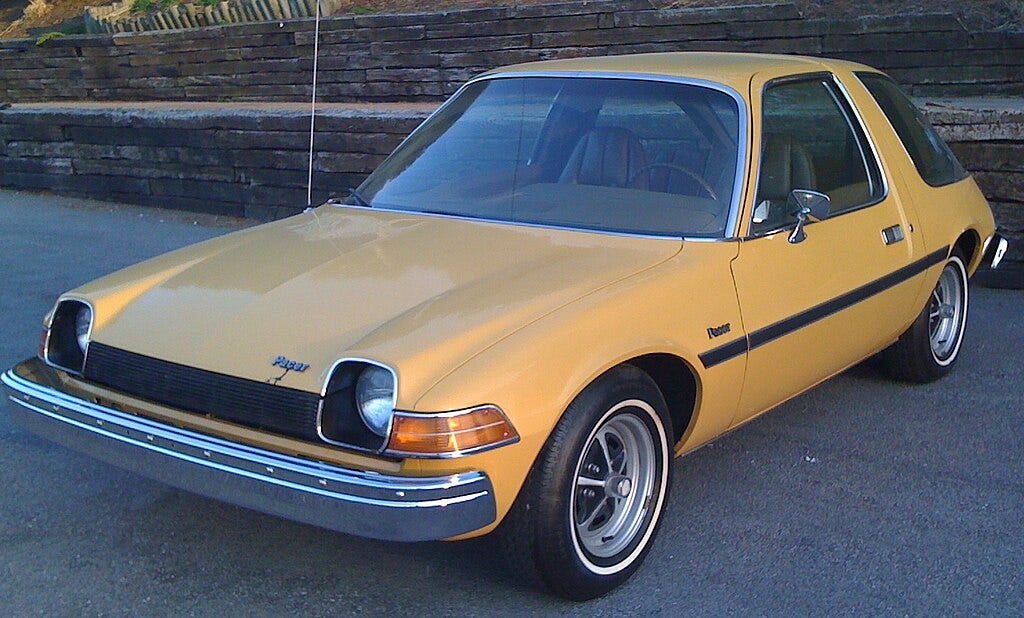
The Pacer and Gremlin, despite gaining a legacy after the fact for being somewhat unreliable (which seems unearned, overall) and also painfully ugly (fair enough), were the best of the bunch, but they had worse overall mileage and were more expensive than their import counterparts.
All of the issues of reliability and large-scale mass explosions aside, the part about gas mileage would very quickly become much more relevant - in October 1973, the Organization of Arab Petroleum Exporting Countries (OAPEC) would announce a total embargo on all oil to any countries that had supported Israel in the Yom Kippur War, including (among others) the US, the UK, and Canada, immediately causing fuel to become an extremely scarce commodity in the US, with gasoline prices spiking over 50% and being rationed or outright unavailable at many gas stations nationwide.
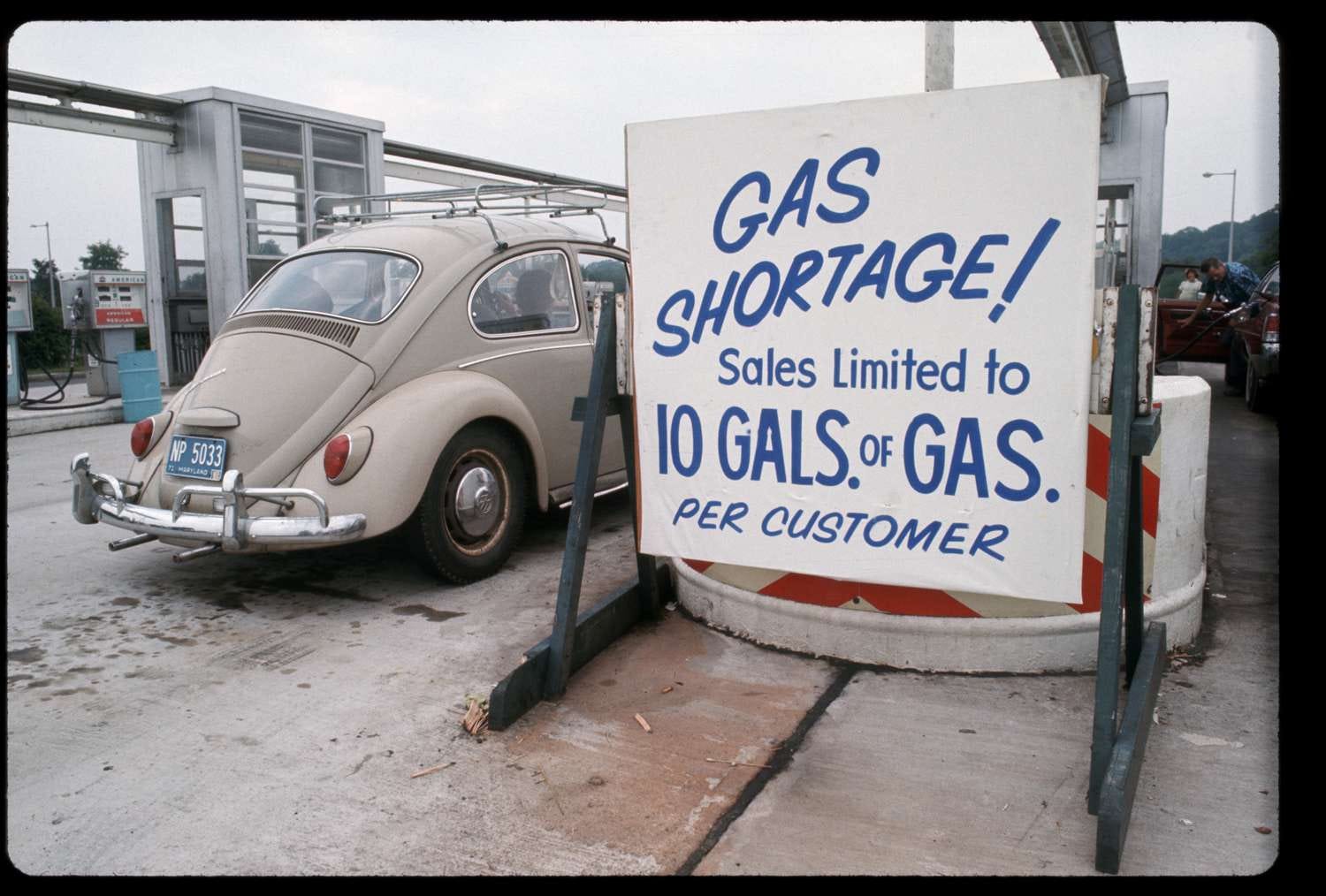
Despite the embargo ending in March 1974, the price of oil remained as high as it did prior, so even if gasoline was more available, an ongoing economic downturn that had started in January 1973 led to a very persistent shock to the American economy, raising prices and costs across the board.
This, essentially, created a market for subcompact cars to thrive. That American companies couldn’t fucking build them created a market for imported subcompacts to thrive. With the Japanese subcompacts performing better than their European counterparts, that was that - even despite the first-gen Civic having a very similar rust problem to the aforementioned Vega, the overall price and performance still made it too damn good of a prospect to the average Joe Boomer who didn’t give a shit if his car was American.
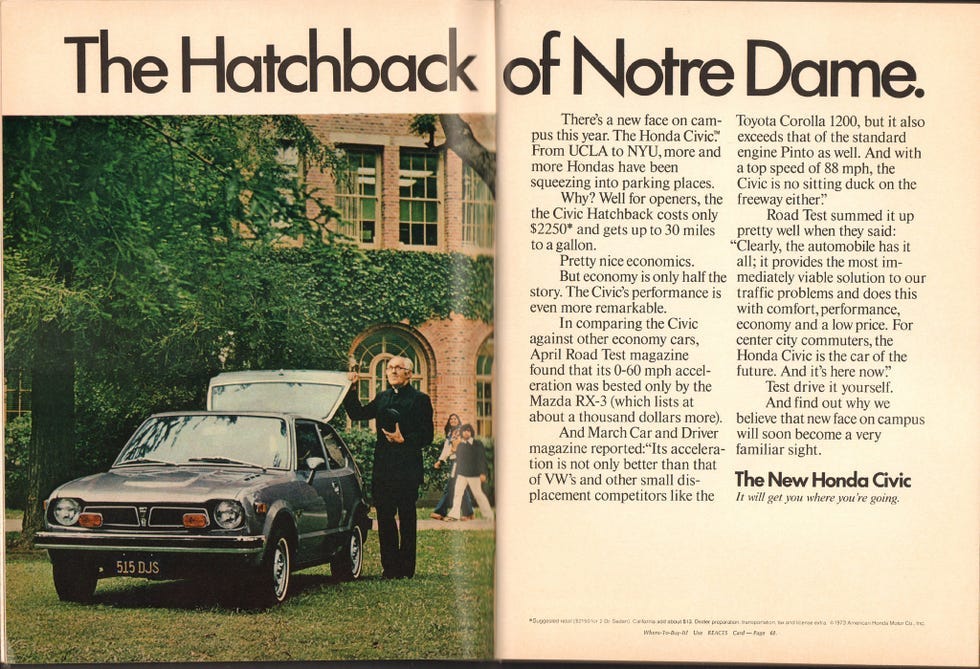
While the market slowly returned to some sense of normality, albeit still more expensive than pre-1973, the American domestic companies continued to try and push back on Japanese subcompacts - albeit mostly via the same models mentioned above (in fact, the whole Pinto-explosion thing wouldn’t even come to the light of the public until 1977).
Once 1979 rolled around, however, there would be a second wind in terms of economic crises - a massive workers’ strike in Iran in late 1978 would cause oil production to crash hard, although the Shah would later bring in Navy personnel to make up the gap. The bigger problem would come in January 1979, when the Iranian monarchy would collapse and be replaced by the reportedly west-unfriendly Ayatollah Khameini, which would come to a significant head in November 1979, when, after the start of the Iranian hostage crisis, President Carter would embargo Iranian oil entirely. By this point, American automotive manufacturing was well into a slump big enough to have its own name - the malaise era, so named after President Carter’s 1979 speech on the oil crisis - and the Japanese import market firmly began to eat every American automaker’s lunch. In 1980, Japan became the largest automaker in the world, and would make up 21% of the American market - up from 9% in 1976.
Detroit would go scrambling to find a market to fight back, trying a variety of options almost entirely in the compact class (not the subcompact class, notably), some popular, like the Ford Escort, some unpopular, like the Chevy Citation and Ford Fairmont. Two months after being inaugurated in 1981, the Reagan Administration would impose significant “voluntary” import restrictions on the Japanese automakers, limiting them to 1.68 million cars per year. In 1985, that was raised to 2.3 million cars per year, and would become entirely irrelevant by the time Honda and other manufacturers had established enough domestic automaking capacity to offset any unfulfillable demand in 1990.
Throughout the 1980s, American manufacturers would continue to struggle with the subcompact market. The Ford Escort would prove to be a hit, but Ford would leave the market totally uncontested between the discontinuation of the Ford Fiesta in 1981 and the introduction of the Ford Festiva - designed by Kia (and originally badged by Mazda), not Ford themselves - in 1988. GM would use the Chevrolet namebadge for the Chevette, a largely unchanged design from the 1970s, up through 1987, as well as rebadging the Suzuki Cultus as the Chevrolet Sprint from 1985 to 1988, rebadging the Toyota Sprinter (look, I promise I’m almost done with the obtusely similar car names) as the Chevy Nova from 1985-87, and rebadging the Isuzu Gemini as the Chevrolet Spectrum. This is a rather small selection of stabs the American companies took at it, but by the mid-1980s, it was pretty evident that all of it was floundering hard compared to the Japanese subcompacts - and, by that point, the Japanese compacts also started to pick up a lot of steam. Honda’s Accord would become the best selling car in the US in 1989.
GM, after stepping back and assessing just how fucked they were in the entire consumer car segment of the market, decided to take a two-pronged approach - they would start an in-depth collaboration with three Japanese companies - Toyota, Isuzu, and Suzuki - to manufacture rebadged versions of their vehicles in American plants. Initially, they did this under most of their brands, but would eventually, in 1989, spin that operation off into a sub-brand called Geo, operating under Chevrolet, where they would continue the operation across several markets - subcompact (Geo Metro), compact (Geo Prizm), and mini-SUV (Geo Tracker) - until 1997.
In 1984, the second prong of that approach would start to form - GM’s “revolutionary” small car project, codenamed “Project Saturn”. They would have a concept car on display that year:
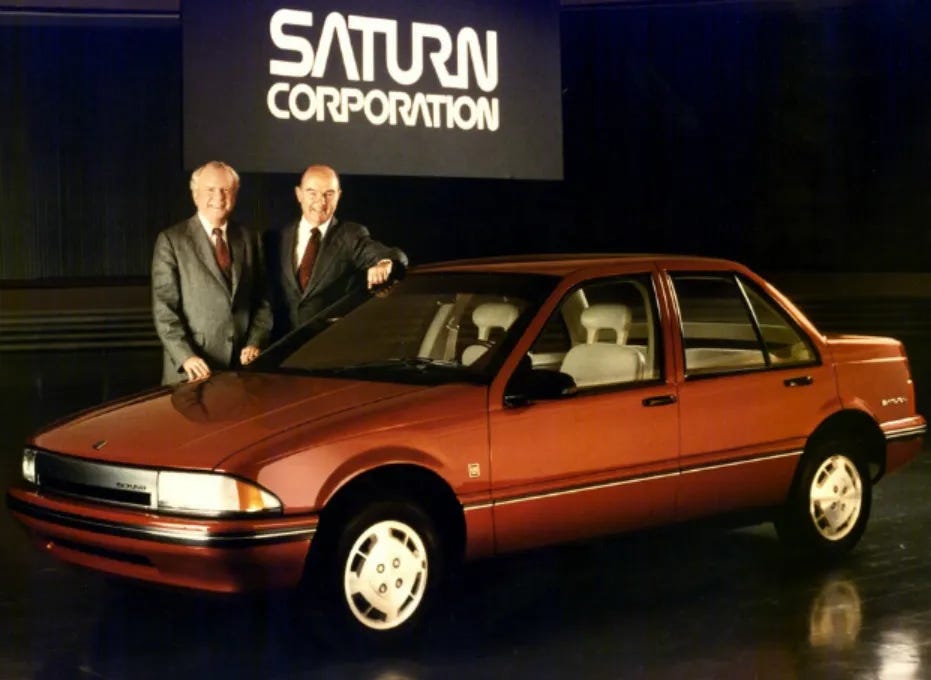
In 1985, GM would shift from their original plan to develop the Saturn into a model for one of their existing lines and decided to take a far more drastic approach, establishing an entire new company - not as a division of GM, but an independent company, with the intent to design and build their own models, independent of any existing GM cars or badges. On January 7th, 1985, the Saturn Corporation of America was founded. They would build a traditional, United Auto Workers-unionized plant in Spring Hill, Tennessee, meant solely for Saturn products and work to establish a dealer network independent to GM’s existing one. The company was designed to be an employee-owned operation as a subsidiary of GM, with employees at the Spring Hill plant working in a “classless”, “direct industrial democracy”, described in a 1990 LA Times article almost like a non-heirarchial car manufacturing plant, which is obviously some weird flavor of corporate-speak but extremely funny to think about. One of their other hooks is that they would run their dealerships on a no-haggle, no-hassle policy, which is that prices were locked, set, and firm on the dealership floor. It was like that Hank Hill plotline where he was very proud of paying flat sticker-price, every time, except people actually liked this because they felt they weren’t getting fucked over by a salesman or dealer. In a couple specific cases, people interviewed at the time were excited for very specific reasons - like a woman in Indianapolis who believed car salesmen were artificially raising prices on her on account of her being a woman. It was all viewed as innovative, new-era, “revolutionary-new-business-for-the-90s” sort of thing.
On July 30th, 1990, GM’s revolutionary new compact car brand rolled their first car out of the factory - a red Saturn SL2. The first Saturn dealership opened at the same time in nearby Memphis.
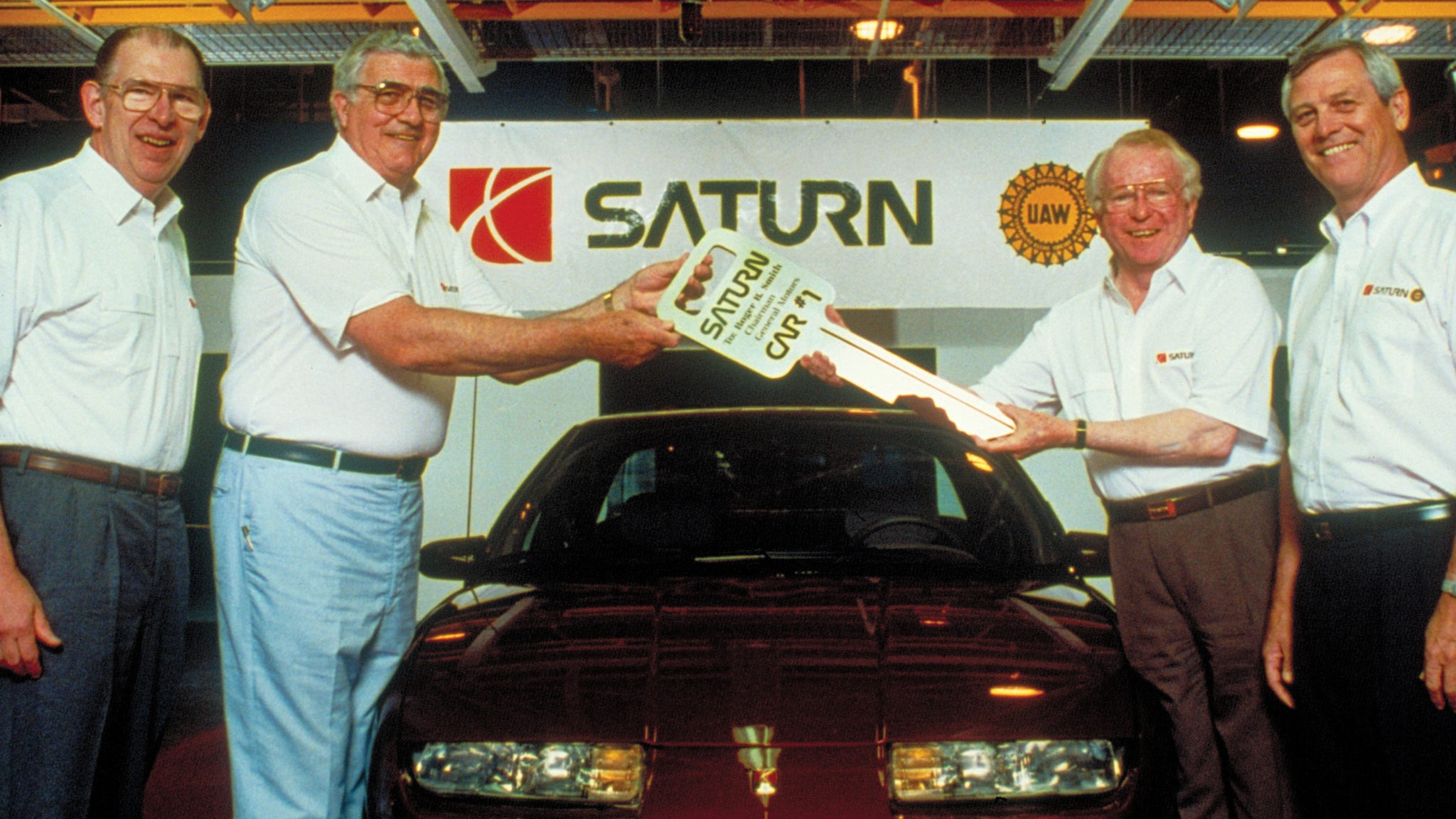
The first cars Saturn rolled out were the S-Series - the SL sedans (SL, SL1, and SL2 depending on trim level), the SW station wagons2, and the SC coupe.
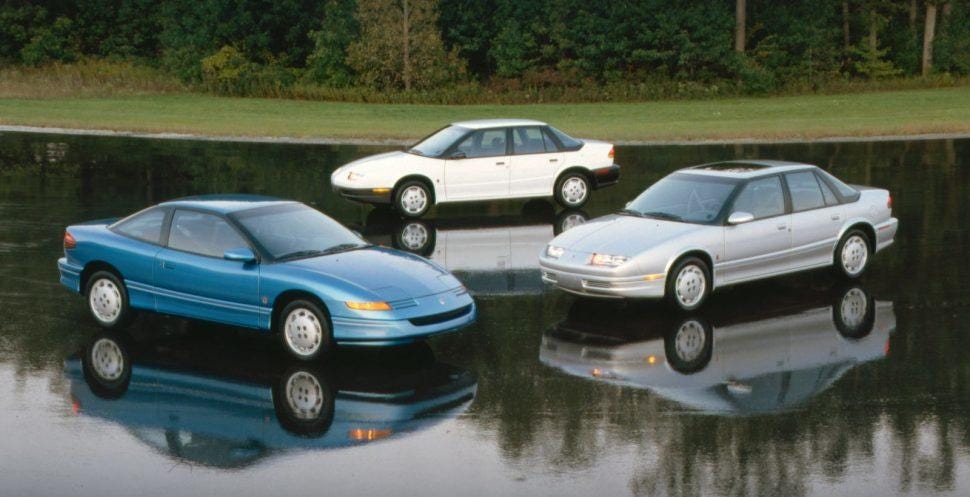
Despite numerous obvious issues right out of the gate - the Bush-inspired recession meant that cars sold very well, but didn’t meet the optimistic sales projections GM had made that would have made back the initial investment of building the plant and the distribution network and so forth, even despite undercutting its contemporaries (a ‘91 Accord bottomed out at $12,545, while an SL2 was $10,570). Despite this, there was difficulty keeping up with the initial demand, and they sold about 50,000 cars in 1991. They would start hitting it out of the park shortly thereafter, selling their millionth car just 4 years after their introduction onto the market in May 1995.
With a focus on dealer friendliness and honesty and compact design, Saturn was, from the start, a division of one of the major Detroit automakers specifically designed to model the sales tactics, design, and vibes of a Japanese car company - even down to the snake logo wordmark.
The focus on dealer and corporate frendliness was a central focal point of Saturn’s marketing, even, because the idea of a car company that doesn’t intend to fuck you at literally every step of the way is an extremely novel idea to Americans.
And it worked!
The Saturns were consistently towards the top of sales charts - the 9th best selling vehicle, 5th best selling car, and 3rd best selling American car of 1994, a repeat performance in 1995, the 8th best selling vehicle, 4th best selling car, and 2nd best selling American car of 1996, and so on and so forth. Consistently, throughout most of the 90s, the Saturn S-Series is the best-selling or second-best selling compact car sold by a US company - and when it is the second-best, it is lagging behind the Ford Escort, a car designed by Japanese company Mazda. The Saturns were safe (consistent four-out-of-five star ratings from the NHTSA for frontal and roll-over collisions), they were very reliable (every S-Series came with one of two inline-four engine designs, one SOHC and one DOHC variant, about 4% of SOHC variants had an issue with cracks developing in cylinder heads, which were all covered under warranty), they were low-cost (ranging in MSRP from $12,085 to $14,730), they were economic on gas (between 27 and 29 combined MPG) and repairs (GM and Saturn intentionally designed an engine to be common across all models with simple maintenance and service). They were designed for, and (importantly) successfully managed to be, the utility, functional, point-A-to-point-B car.
Saturn, as an operation, was working so well that GM even tasked them with being responsible of service and distribution of their fancy new electric vehicle, the EV-1, despite it not being badged as a Saturn (or as any GM brand, to be fair).
This is it. We’ve perfected the American car and the operation supporting it. All it took was aping the Japanese market as much as they can possibly get away with. It’s over and we can go home now. Right? General Motors - and the market at large - didn’t piss it all away for nothing?
Well, we wouldn’t be here if things were that easy, now would we?
The problem with intentionally running a car company to emulate the operation and products of the Japanese brands is that it represents a significant departure from how the traditional car companies work in this country. Among other things, one of the more notable pieces of the puzzle is that the dealership model is deeply ingrained in American society, and the petit bourgeoise responsible for running those dealerships really do want to abuse their customers as much as possible. One of the knock-on issues of this is that people went to Saturn dealerships…instead of other GM dealerships. 41% of Saturn owners in the first few years were coming from owning another GM car. Yes, General Motors had accidentally had too good of an idea and it was eating into their other ideas.
The obvious solution was, of course, for General Motors to stop pissing in their own pool by pissing in their own pool even harder. In 2000, GM began production of the Saturn-badged L-series, manufactured at GM’s common assembly plant in Delaware using the same platform and engine as the Opel Vectra, in obvious counter to the Saturn’s previous - and to this point successful - strategy. The L-series cars, which were midsize cars, were much worse than the S-series, with widespread issues with engine failures right out of the gate. This would pretty much set the standard for Saturn from hereon out.
Their next move, in 2002, would be to introduce the world to their next idea: the Saturn VUE. And with that, we can move from the one example of “if you can’t beat ‘em, join ‘em” in the American auto industry to what every other company was up to - if you can’t beat ‘em, simply quit trying and start a whole new class of bullshit instead.
Starting in the mid-1980s, an oil glut led to fuel being disastrously cheap, creating a bigger economy for pointlessly larger vehicles. The other disastrous factor at play here was, of course, Ronald Reagan. The corporate average fuel economy (CAFE) standards that had been introduced in 1975 that dictated that automakers needed to meet certain cumulative MPG standards included a certain amount of leeway for vehicles classified as “light trucks” in order to not penalize companies for manufacturing work trucks.
American Motors Corporation, specifically, in building their new 1984 Jeep Cherokee XJ, realized that if they updated the interior and features of the new design to resemble a larger station wagon, they could theoretically capture both markets at once with a more expensive vehicle. The biggest roadblock was, of course, getting it certified by the Environmental Protection Agency as a light truck despite being overtly and obviously intended for passenger use. The EPA, after intense lobbying on AMC’s part, did exactly as they wanted, thus birthing the modern SUV market, and that was the end of that.
By 1994, when the EPA created a specific market category for it, the SUV market had expanded drastically. Jeep had three models (Cherokee, Grand Cherokee, and Wagoneer), Ford had the Bronco and Explorer, GMC had the Jimmy, Yukon, and Suburban, Chevrolet had the Suburban, two distinct models of Blazer, and the Geo Tracker (which was very distinctly a mini SUV that probably didn’t deserve the truck classification anyway), and Oldsmobile had the Bravada; the Japanese had also taken a stab at it with Toyota’s 4Runner and Land Cruiser, two Suzuki models, Honda’s Passport, Mitsubishi’s Montero, three Isuzu models, Nissan’s Pathfinder, and Mazda’s Navajo. These models were very successful, very quickly rising to a societal status symbol, almost. They were pushed extremely heavy by the automakers for one reason: the profit margins were super high (Ford was making $18,000 per Excursion sold at one point in the 90s), especially compared to the compact market. They heavily marketed these things on the idea on it being a great all-around vehicle and being a great way to stand out and express your individuality as a person.
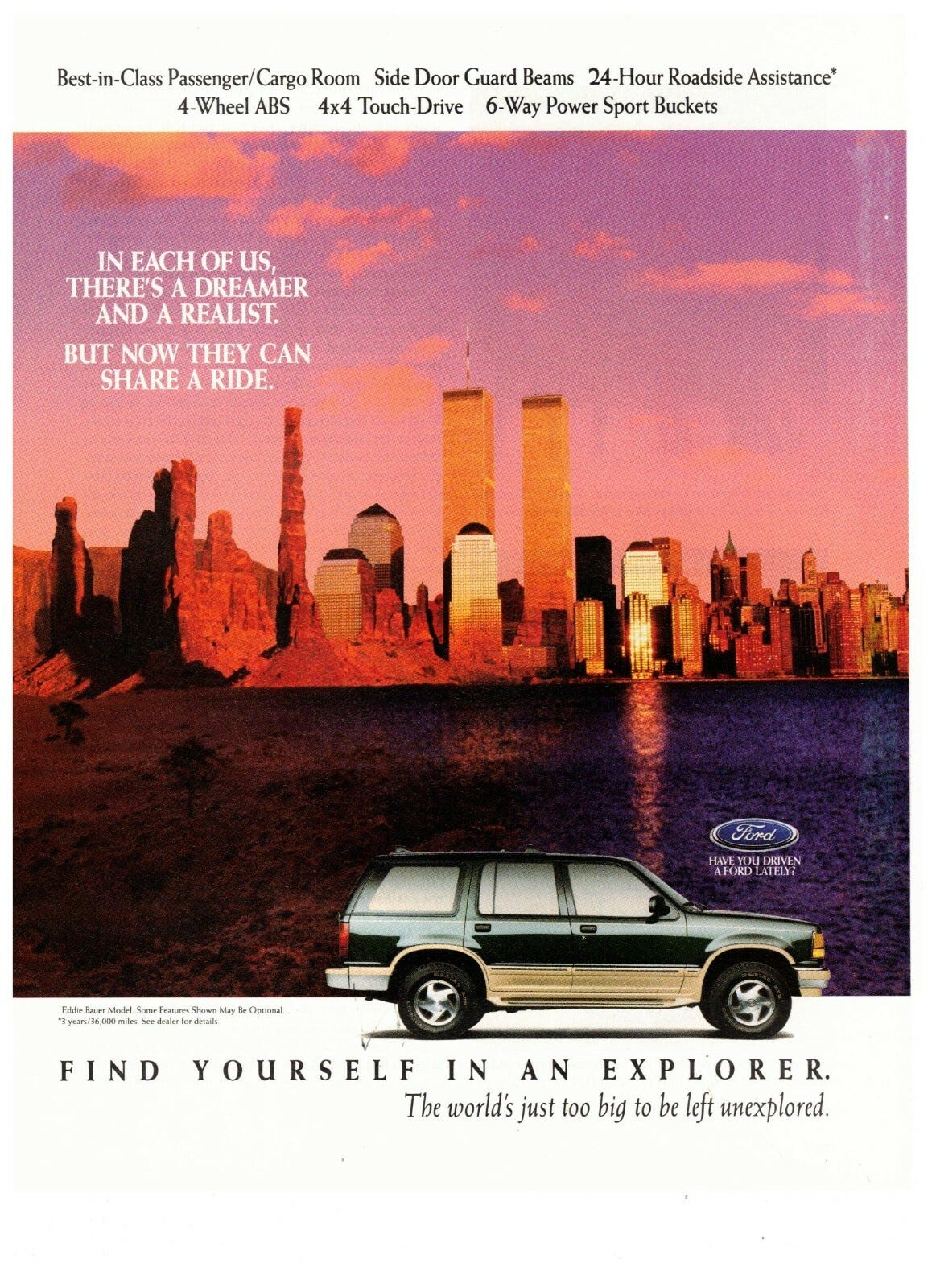
Similarly, consumers reacted the way they did by the mid-1990s for one reason: the economy was banging. Americans were making more per capita than ever before, and banks (and dealers and manufacturer financing departments, even!) were absolutely eager to hand out loans like candy.
Beyond that, and a very major component to all this that ties back to what I said at the very start of this article, is the cultural political shift of the 1990s. The Clinton Administration was met by a very increasingly deranged Republican Party of Newt Gingrich, Dennis Hastert3, Rush Limbaugh, and others; several combined incidents of high-profile police brutality in the early half of the decade contributing to greater racial polarization, a burgeoning 24-hour fascist cable news market with the launch of Fox News in 1996, and the newly-expanded Internet that allowed individual fascist extremists (Alex Jones, Matt Drudge, etc.) to flourish in both audience size and reach,. Combining all that with the fact that the economy was good, American society at large quickly made a turn for the ugly.
Of course, one core component of fascist ideology is that of rugged individualism and unconstrained displays of masculinity, and these were both one of the major underpinnings of SUV marketing of the time.
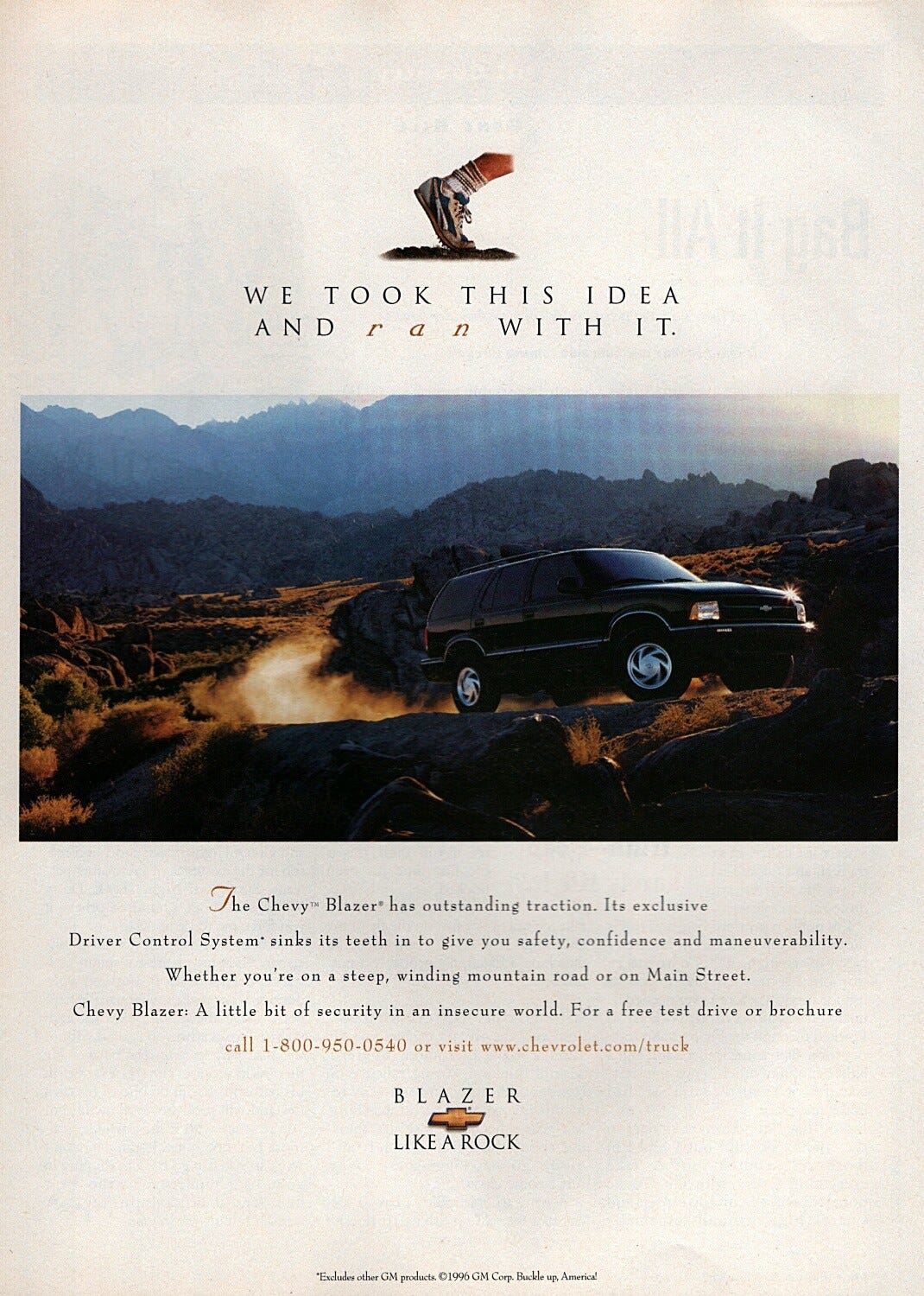
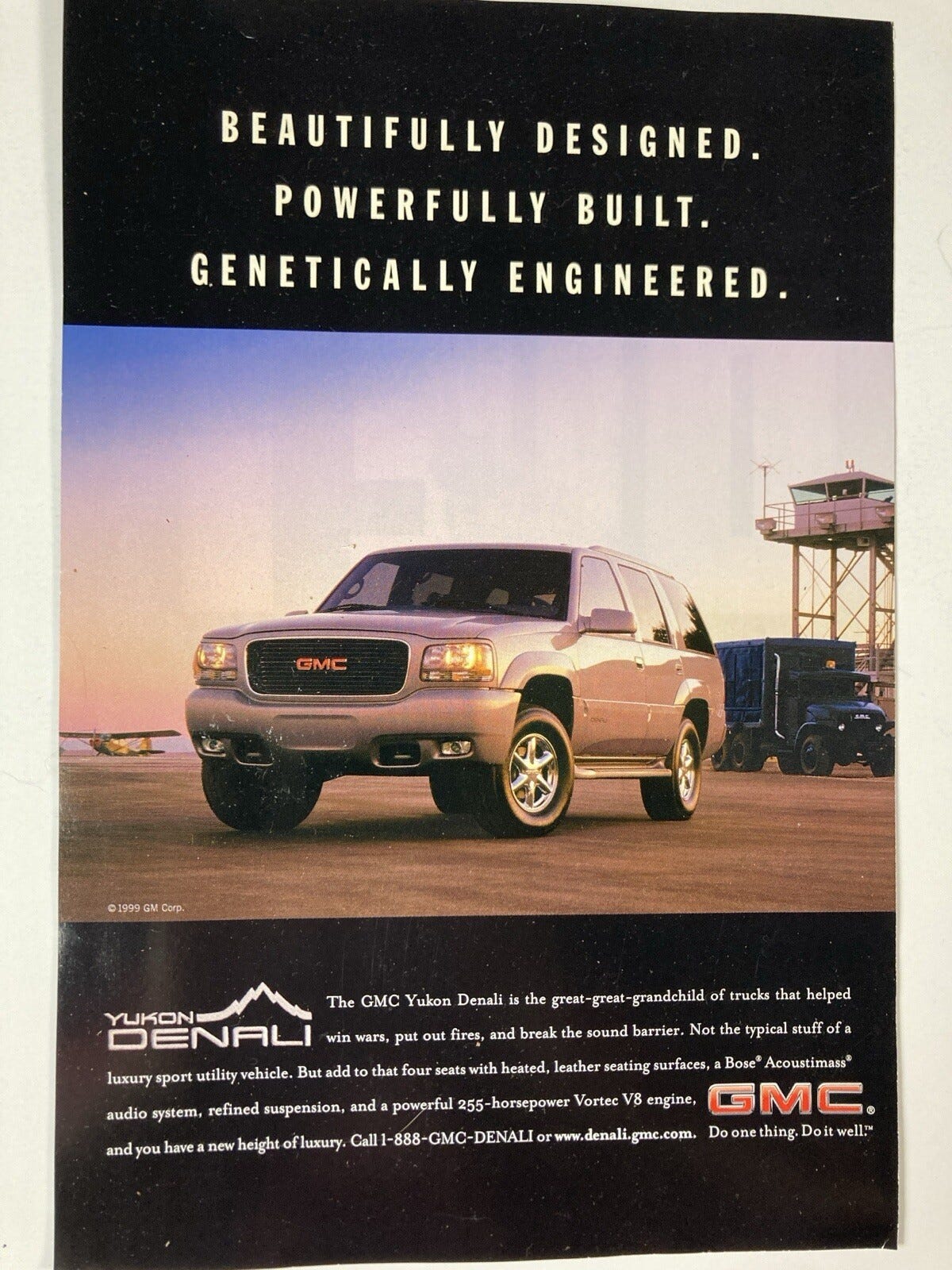
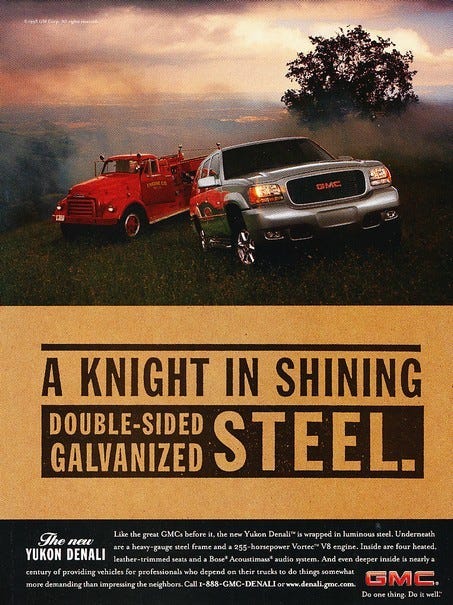
And it worked.
In the same sales reports I linked for the Saturns above, the Ford Explorer skyrocketed from 8th best selling vehicle overall in 1994 to third by 1996 - and that’s including the F-150 and Chevrolet C/K pickup, which, due to their use as fleet vehicles, had both been the 2 best selling vehicles in the US since the 1970s. Considering the specific consumer-based alignment, the Ford Explorer was widely reported as the best-selling consumer vehicle in the US, a title it held for several years.
It was still something of a status symbol, though. Given the cost of the Explorer - nearly 150% of the median new car cost in 2000 - there was still a barrier that kept SUVs from utter ubiquity. Beyond that, they didn’t have universal market appeal - the luxury segment of the market mostly consisted of rebadged versions of existing mid-range SUVs rather than anything unique.
Spurred by the success of all of their SUVs, but also the absolute runaway success of the Ford Explorer specifically, General Motors released three SUVs that would break that mold and bring the SUV to a greater audience, creating one of the two major factors that would solidify the American automakers’ future gutting. All three of them would be released under badges that previously exclusively made cars and nothing else, further poisoning the well.
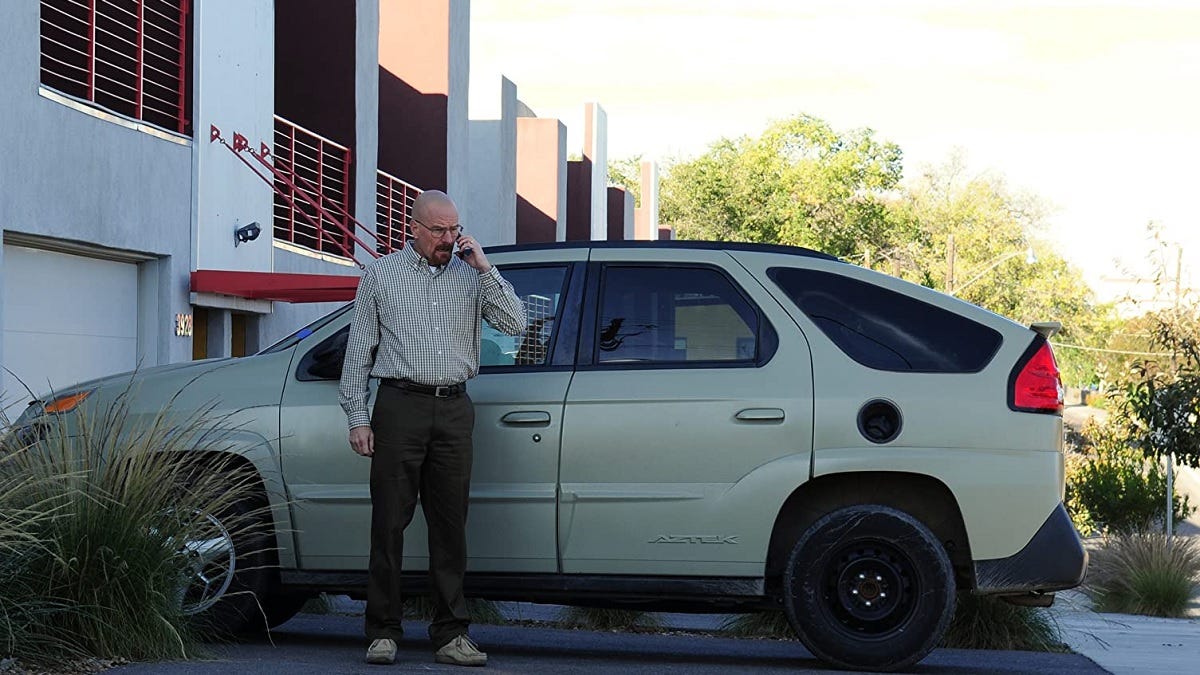
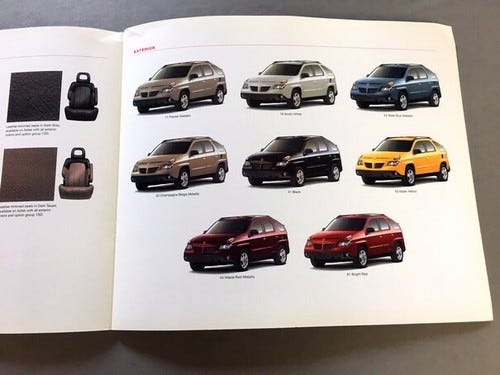
Number one: the Pontiac Aztek (2000).
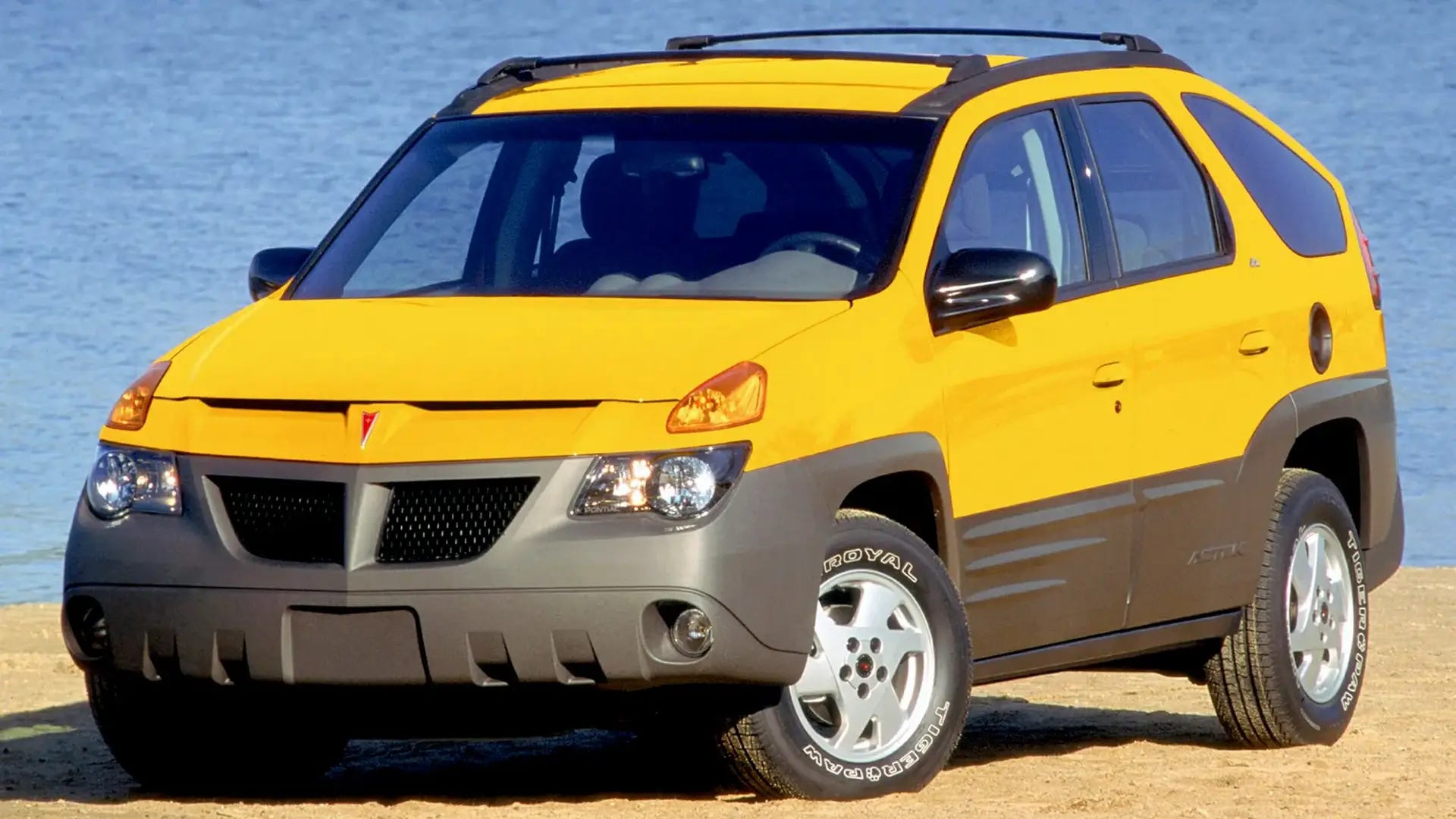
Yes, really, this fucking thing.
The Aztek, first going on sale in Summer 2000, was, as said above, the first Pontiac-badged SUV. It had a unique design based off a concept car from 1999 and leaned very hard into the rugged individualism, including a cross-promotion with CBS’s new smash hit Survivor in 2000. The late 90s "extreme sports” culture and what I tend to call faux-outdoorsiness was specifically used heavily in its promotion.
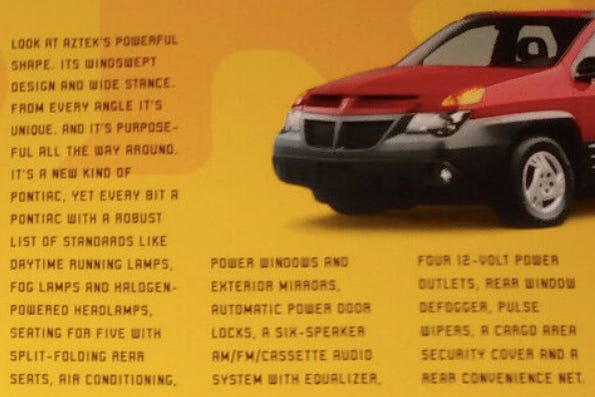
Was the car heavily mocked for its design upon its launch? Yes. Was it a smash hit? No. The Aztek sold a total of 120,000 units in the US in its entire 7 years on the market. (It also reportedly sold a total of 90 units during its brief time on the Mexican market.)
But it was decently cheap. The Aztek, with its all new design and internal technologies, was only $22,060, only $1,000 more than the median new car price for the year. Beyond that, it was also targeted specifically at the newly-of-age-and-also-money Generation X, and, again, it was the first wholly-new SUV design released under an existing badge that did not previously sell SUVs. In that sense, it paved the way for the next two examples and what came after that.
Thankfully it came to cultural relevance after they stopped making them, or else we’d have sold an extra hundred thousand to people who like Breaking Bad too much. (Fun fact, actually, the car in the show was repainted a bespoke green that did not come even close to any of Pontiac’s factory options).
Number two: the Saturn VUE (2002).
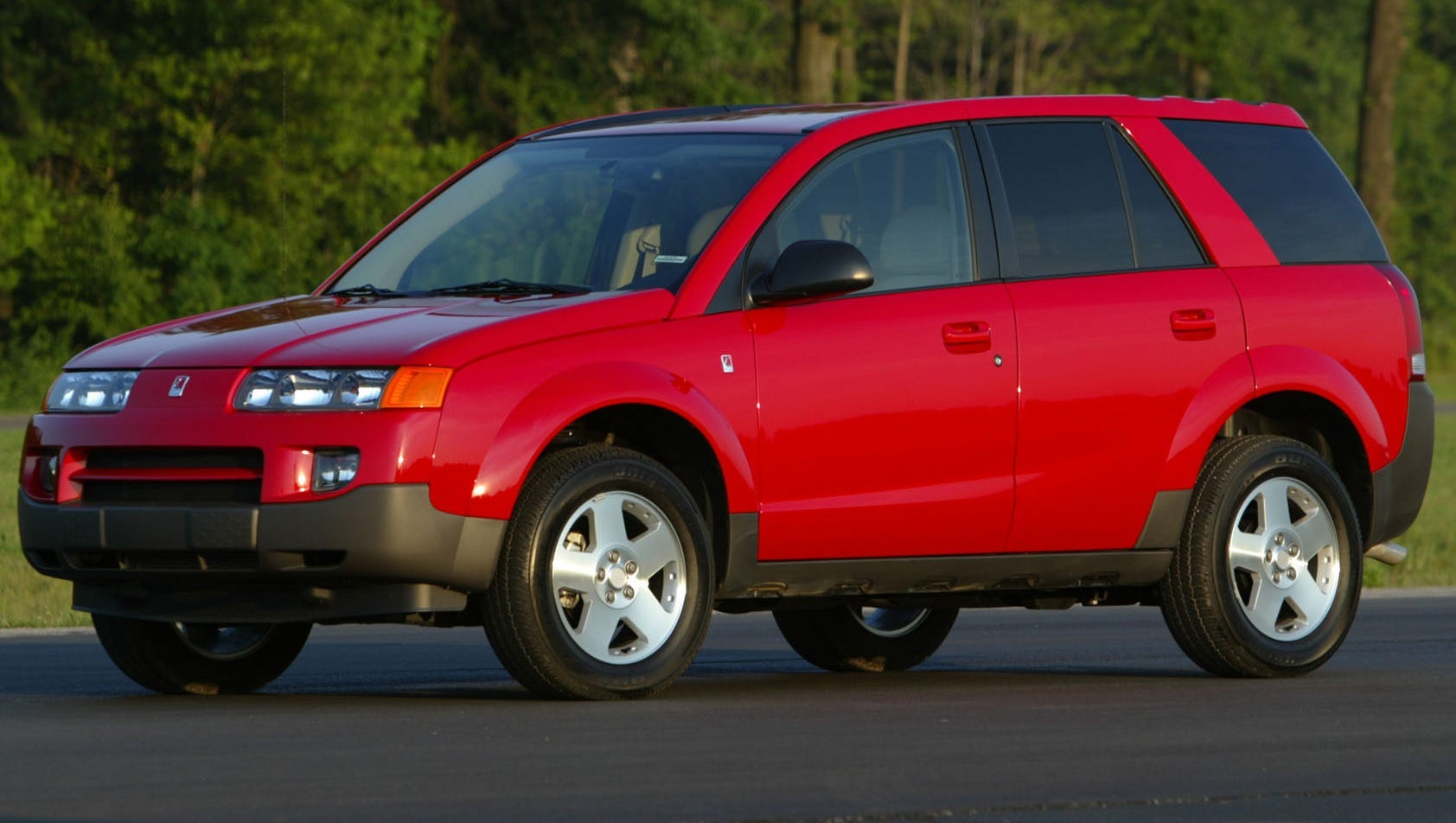
The Saturn VUE, introduced in 2002, was the first model built on GM’s brand new Theta crossover SUV platform. It was, again, the use of a badge only ever intended for cars to give it credibility among Saturn’s intended market demographics. Now, this is on here in part because it helped open the floodgates to every make having an SUV of every class (and eventually only having SUVs of every class), but it’s also on here for one much bigger reason: in 2002, the VUE hit the market at a starting MSRP of $17,775, way below even the median new car cost of the era.
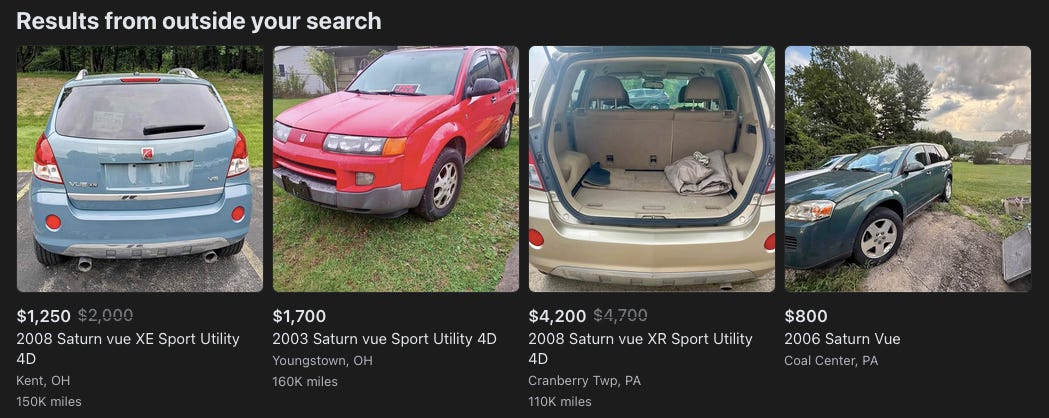
Was it a budget crossover SUV that lacked a lot of features other ones did? Of course. But it was a budget crossover SUV. GM’s first, even. And boy, did it sell like hotcakes. People loved this fucking thing, and it marked a turning point for the SUV becoming explicitly normie across most American income brackets (of the time, anyway). You can still find them on the secondhand market for whatever price you like.
Number three: the 3rd generation Oldsmobile Bravada (2002).
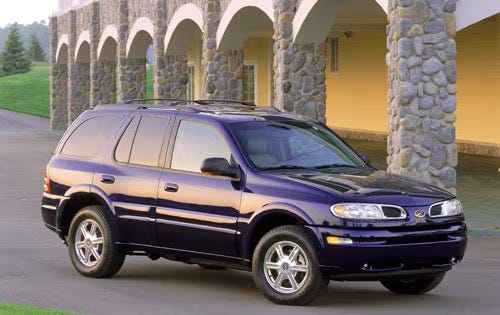
The Bravada is unique on this list: it was initially introduced in 1990. However, the first two generations were rebadged Chevy Blazers, which means the earlier comment about luxury-tier SUVs remained true. When the 3rd generation model came out, this was vastly different. It served as the first vehicle on GM’s GMT360 platform, which would eventually help define the SUV in the 2000s with other cars, like the Chevy TrailBlazer.
But also, it was the first bespoke true luxury SUV design from Detroit outside of the Cadillac brand (which is importan, because Cadillac’s market position means they’re unlikely to attract buyers that aren’t expressly looking at high luxury, while Oldsmobile was). With that combined with the Saturn VUE alongside whom it launched that same year, General Motors had every financial class covered with one vehicle class.
And when you cover every financial class, who’s to say you need to cover every vehicle class. Here, we reach a point.
Honorable mention (not American, but still relevant): Porsche Cayenne (2002).
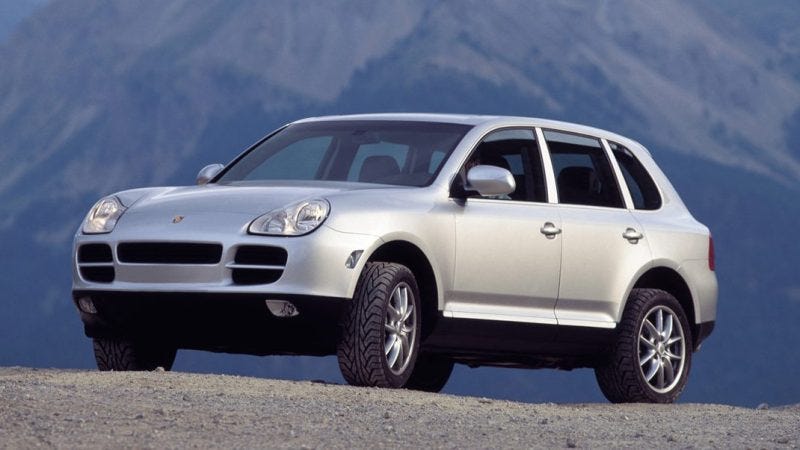
The Cayenne is not an American vehicle, but as the first major SUV from a brand dedicated to luxury sports cars, it also set a trend that’s really important - especially in the ultra-high-end.
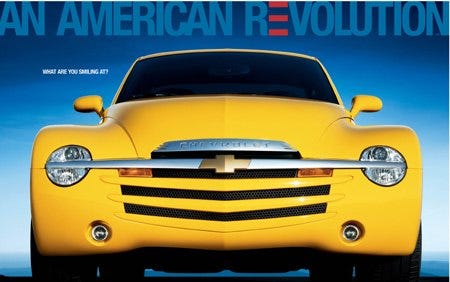
Additionally, of course, the second major contributing factor to the SUV was an intensification of some of the political factors mentioned above - SUV sales and particularly crossover sales spike drastically (in terms of percentages of those sold, not overall numbers) in the aftermath of September 11th, continuing to represent the American decline into fascism. Chevrolet specifically leaned into American jingoism pretty hard, wheeling out their “an American revolution” campaign in the middle part of the 2000s.
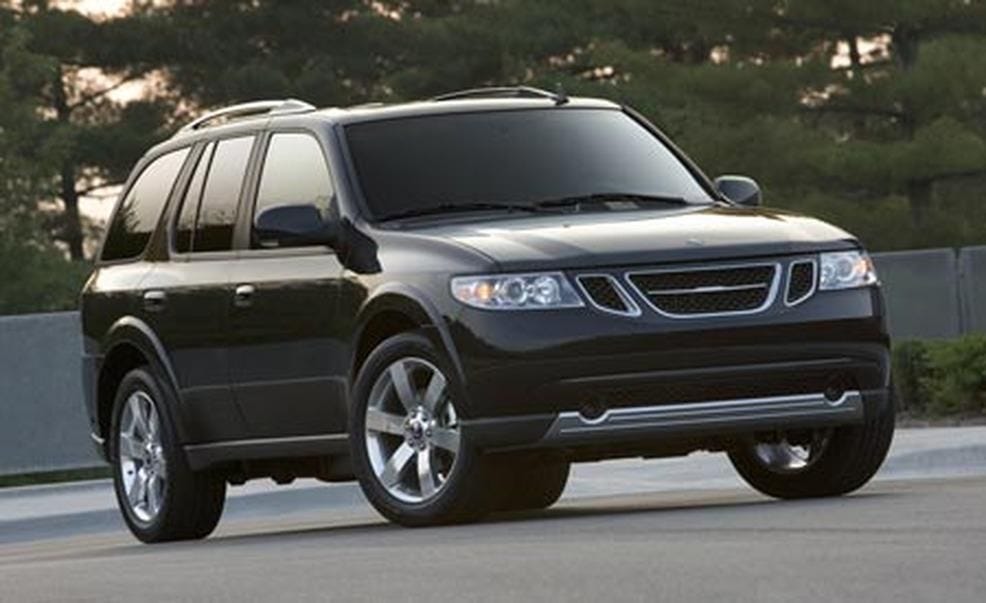
The meteoric rise of SUV led to patently absurd stuff, too, like the Saab-badged 9-7x.
After GM’s collapse in 2008, GM would dramatically simplify brands and product lines - in the US, they were limited to Chevrolet, Buick, Cadillac, and GMC. In 2025, this is still their entire brand portfolio. Buick sells a total of 4 models in the US, all SUVs or bigger (the smallest one shares a platform with the Chevy Trax), Chevy sells 8 SUVs, 4 trucks, and 5 Corvettes, GMC sells 4 SUVs and 5 trucks (the Hummer existing in both SUV and truck variant), and Cadillac sells 7 SUVs and 3 sedans, those being the only sedans in GM’s entire platform.
We shouldn’t have ever bailed them out, but I digress.
Now - it’s a far cry from the fascism of the 2000s to the fascism of the 2020s. So how did the gap close? Well, it’s simple - an increasingly fascist society contributes majorly, but two other major points are the massive cost inflation and the increase in sales (plus blurring of lines as to what constitutes) a proper pickup truck.
Most modern pickup trucks, including all GM and Ford models, share a platform with at least one SUV, as both classes of vehicle get physically larger and larger, to the point that they are largely the same vehicle class in every sense other than cargo capacity.
So, in short, if you’ve lost the model diversity covering every market sector and your response to consumers is mostly just “simply take out a bigger loan”, what do you have left? Simple answer - tell people that they’re not masculine enough if they don’t have the absolute largest (and most expensive) pickup in Chevrolet’s model lineup.
And if you look at the sales numbers? That's the sort of shit that works. When the sort of people who are most interested in buying American-made cars are, themselves, guys really into fascism or at least fascist vibes, what can GM even do other than lean into it? Well, morally, they would simply choose to not make as much money and make a normal car, but, as always, capital poisons all.
Where do we go from here? Who knows. The default rates on auto loans combined with skyrocketing monthly payment amounts smells to me like we’re on the verge of another subprime loan crisis, just about cars instead of houses this time. And when that happens...hoo boy. Buckle up. And with the newest major American automotive manufacturer being run by an open Nazi making horribly ugly, unsafe, impractical trucks “for the apocalypse” and the American public actually buying them, the politics sure as fuck aren’t getting better any time soon.
I think, in the end, all there is to take away from this is that the rise of the SUV and all the consequences thereof, including a shitton of preventable pedestrian deaths, was purely the result of American consumers being genuinely gullible, impractical, easily manipulated by the dumbest of culture war fodder, and all around just generally generally stupid, and, more importantly American automakers knowing all of those things and choosing to engage in an arms race with themselves, any future consequences or effects be damned. And they’re not gonna stop until every child playing in their neighborhood across the United States gets mulched by the all-new, state-of-the-art GMC Yukon (now gets 14mpg!).
Can we, ourselves, fix it? Probably not, the politics are too right. But when GM, Ford, and Stellantis inevitably collapse under the weight of their own 4x4s, the blueprint for how to bring back sustainable American auto manufacturing has been right in front of us the whole time.
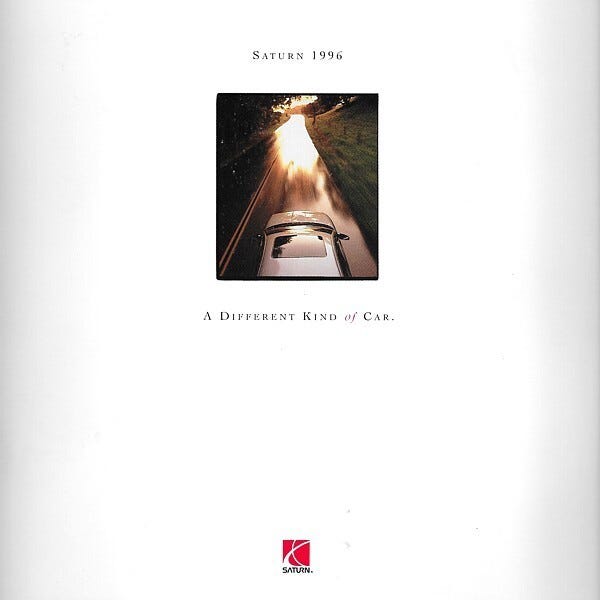
For now, though, all I can think about is how much I want to sell my Mitsubishi crossover, get out from under my awful loan, and get a car that doesn’t make me feel ashamed - a 1999 SL2.
Corrections made after publication:
- The Chevrolet Sprint was a rebadged Suzuki Cultus, not an Esteem. This was a typo brought on by writing while “Better Call Saul” was on in the background.
- The Ford Festiva was not designed by Mazda, it was designed by Kia, then rebadged by Mazda, and then rebadged again by Ford. This was the fault of me not reading closely enough.
- Added clarification on the Cadillac Escalade’s existence and market position. This was initially a shortsighted intentional omission on my part.
- Added clarification on the fact that sports cars exist. This was initially an intentional omission on my part.
Fund SEPTA and also the Port Authority, you stupid assholes.
The SW was not added to the lineup until 1992, but was still based on the SL pretty damn closely.
Convicted serial pedophile.